Wiring Installed to Support Modern Electrical Loads
Electrical Services in Buffalo for homes requiring panel upgrades, dedicated circuits, and code-compliant wiring installations
MD Construction provides electrical services in Buffalo for homeowners upgrading panels, adding circuits, or wiring remodels and additions where new lighting, outlets, and appliances demand reliable power delivery. You need this work when your existing panel lacks capacity for an electric range or air conditioning, or when a room addition requires wiring routed through walls and connected to dedicated breakers. The work involves running cable through framing, installing boxes for outlets and switches, and connecting circuits at the panel in a sequence that meets National Electrical Code requirements and passes inspection.
Panel upgrades begin with shutting off power at the meter and replacing the old panel with a unit that provides additional breaker slots and higher amperage capacity, often increasing from 100 to 200 amps to support modern loads. Dedicated circuits are run for appliances such as refrigerators, dishwashers, and HVAC equipment, with wire gauge and breaker size matched to the load. Outlet and lighting installations follow layout plans that prioritize function and code compliance, including GFCI protection in wet locations and AFCI breakers in living areas. All connections are made tight, boxes are secured to framing, and circuits are labeled clearly at the panel so future work can proceed without confusion.
If your home needs more electrical capacity, new wiring for a remodel, or dedicated circuits for appliances, reach out to discuss the scope and schedule the work in Buffalo.
What Happens During Wiring and Panel Work
You will see cables pulled through drilled holes in studs and joists, with staples securing the wire at intervals that prevent sagging or damage during insulation and drywall installation. Outlet and switch boxes are installed at standard heights, and cables are stripped and connected using wire nuts or push-in connectors that ensure solid contact. At the panel, each circuit is landed on a breaker rated for the wire size and load, and the neutral and ground wires are terminated on their respective bus bars according to code.
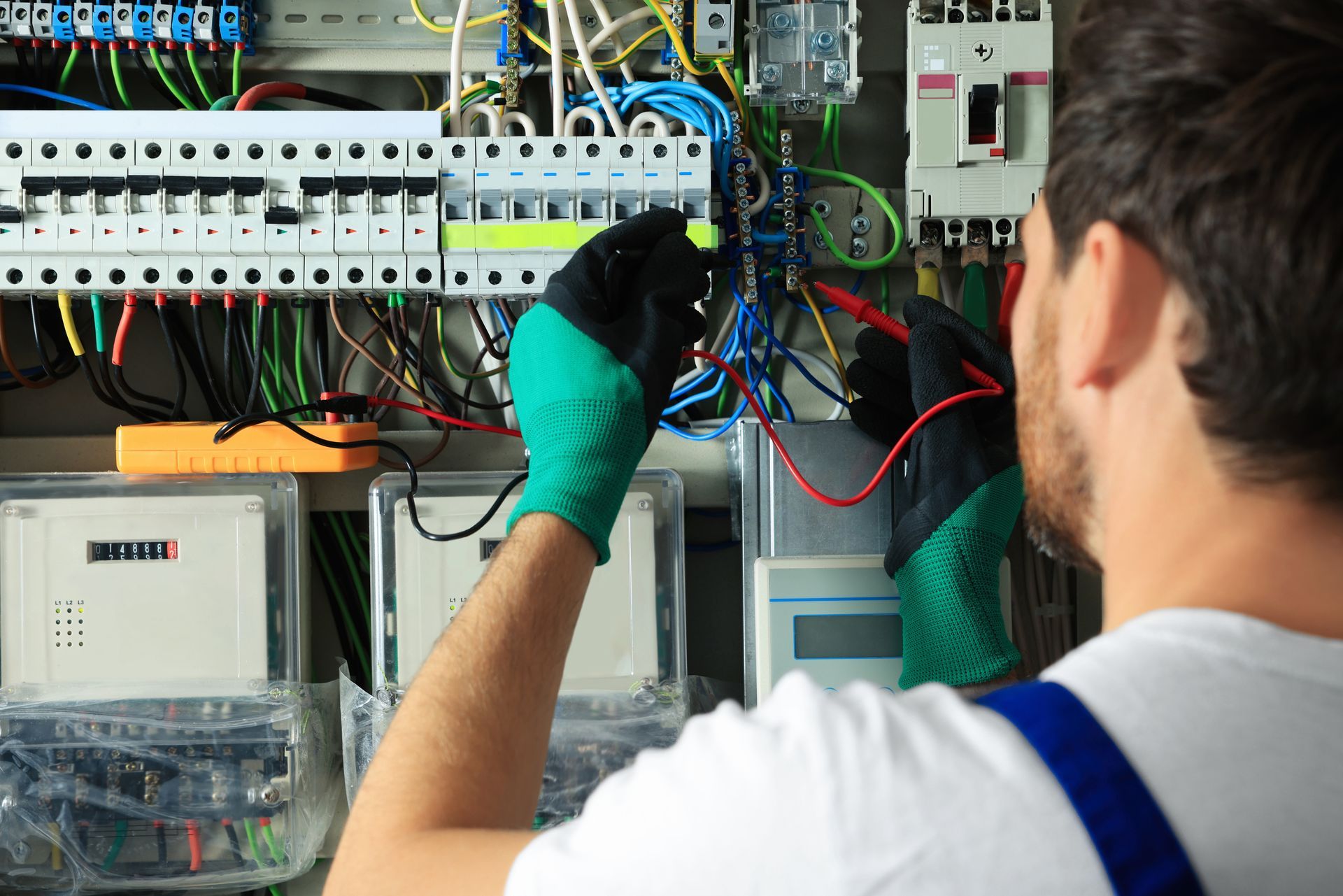
After wiring is complete, you will notice outlets that accept plugs firmly, switches that control lights without buzzing or flickering, and a panel that provides ample capacity for current and future loads. MD Construction tests circuits with a multimeter to confirm correct voltage and polarity, and arranges for inspection before walls are closed. The result is an electrical system that powers your home safely, supports the devices and appliances you rely on, and meets the standards required for insurance and resale.
The timeline depends on the number of circuits and the complexity of routing cable through existing or new framing. A panel upgrade typically takes one day, and rough-in wiring for a modest addition takes two to three days depending on access. Final installation of outlets, switches, and fixtures happens after drywall is finished, and smart home wiring or low-voltage systems are not included unless discussed as part of the project scope.
Common Questions About Residential Electrical Work
Homeowners often ask about capacity, safety devices, and what changes are visible after the electrical work is finished in Buffalo.
What size panel do most homes need?
A 200-amp panel provides enough capacity for most modern homes, including electric heating, air conditioning, and multiple large appliances running simultaneously.
How do GFCI and AFCI breakers protect your home?
GFCI breakers shut off power when they detect current leakage, preventing shocks in wet areas, while AFCI breakers detect arcing faults that can cause fires in living spaces.
When is a dedicated circuit required?
Dedicated circuits are required for high-draw appliances such as electric ranges, dryers, and central air conditioning units, which cannot share a breaker with other loads.
Why does wire gauge matter?
Larger gauge wire carries more current without overheating, so circuit loads are matched to wire size and breaker rating to prevent tripped breakers or fire hazards.
How does Buffalo building code affect electrical work?
New York electrical code requires AFCI protection in most living areas, GFCI protection in kitchens and bathrooms, and proper grounding and bonding to protect against shock and lightning damage.
MD Construction handles electrical installations and upgrades throughout Buffalo with attention to load calculations, code compliance, and inspection coordination. If your project requires panel upgrades, new circuits, or wiring for a remodel or addition, contact us to review the requirements and schedule the work.